Whether you are a weekend hobbyist or a tournament pro, the hook is the most critical link between you and the fish. Choosing the wrong one doesn’t just mean a missed bite; it can mean a snapped line or a deep-hooked fish that won’t survive release.
Here is a breakdown of the most common fishing hooks and when to use them to ensure your tackle box is ready for any water.
1. Bait Hooks (The All-Rounders)
These are designed to hold live or prepared bait securely.
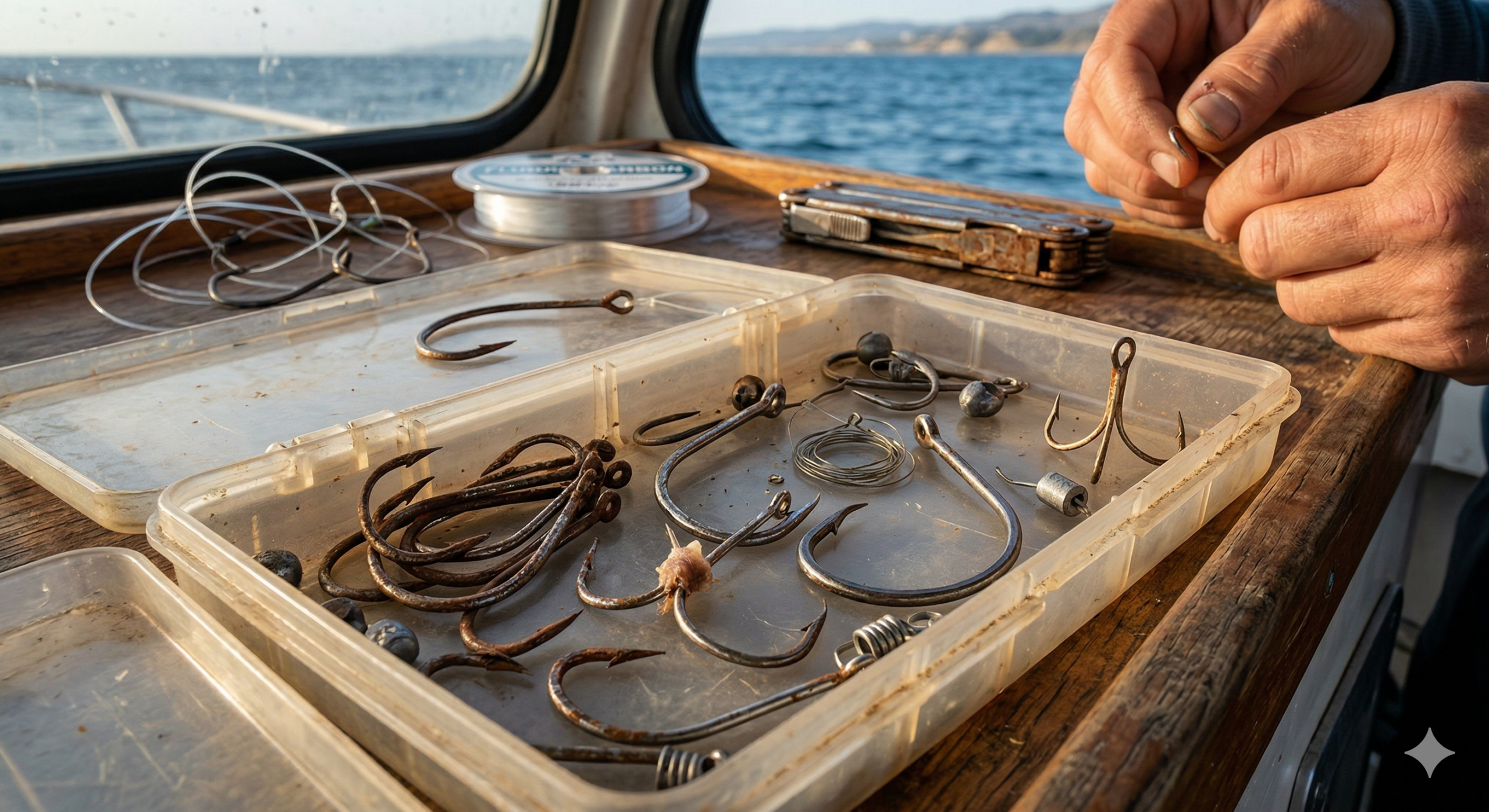
- Baitholder Hook: Features tiny barbs on the shank to keep worms or leeches from sliding off.
- Circle Hook: Designed so the fish hooks itself in the corner of the mouth as it swims away. Pro Tip: Never “set the hook” with a circle hook; just start reeling.
- Octopus Hook: Short-shanked and rounded. Great for natural baits when you need a stealthy presentation.
2. Bass & Soft Plastic Hooks
If you’re fishing with rubber worms, creatures, or craws, these are your bread and butter.
- EWG (Extra Wide Gap) Hook: The “gold standard” for Texas rigging. The deep bend allows the hook point to clear thick plastic baits when a fish bites.
- Offset Shank Hook: Similar to the EWG but with a narrower gap, perfect for slim worms and finesse setups.
- Wacky Hook: A short, wide-gap hook used for hooking a rubber worm right through the middle. Often comes with a “weed guard” to prevent snags.
3. Treble Hooks
These feature three bends and points fused to a single eye.
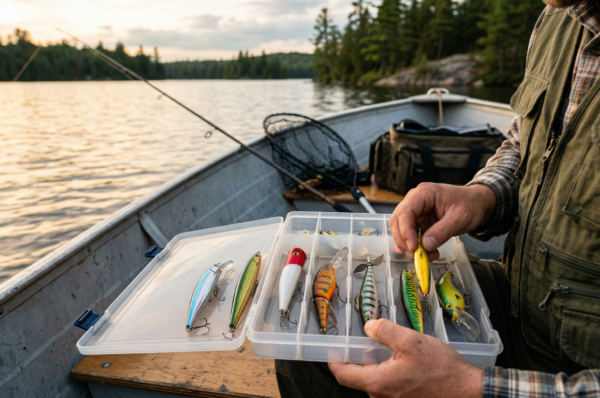
- Best For: Crankbaits, jerkbaits, and topwater lures.
- Safety Note: They provide the best hook-up ratio but are the hardest to remove. Always keep a pair of long-nose pliers handy!
4. Specialized & Technical Hooks
For when the conditions get tough or the species gets specific.
- Siwash Hook: A single hook with a large eye, often used to replace treble hooks on spoons or lures to make “catch and release” easier and safer.
- Jig Head: A hook with a lead (or tungsten) weight molded onto the head. Essential for bounce-along-the-bottom fishing.
- Aberdeen Hook: Made of light, thin wire. If you get snagged on a log, the wire will bend rather than snap your line, and it keeps delicate minnows alive longer.
Hook Anatomy: Quick Reference
To understand hooks, you need to know the “lingo”:
- The Point: The sharp end that penetrates the fish.
- The Shank: The long straight part between the eye and the bend.
- The Gap: The distance between the shank and the point (wider gaps are better for thick baits).
- The Eye: Where you tie your knot ($Uni$, $Palomar$, or $Improved$ $Clinch$).
Which Hook Size Do I Need?
Hook sizing can be confusing. Here is the “Golden Rule” of sizing:
- Standard Sizes: Run from 32 (smallest) to 1 (largest). A size 4 hook is much larger than a size 12.
- Aught Sizes: Once you pass size 1, they go to 1/0, 2/0, up to 20/0. In this system, the higher the number, the larger the hook.
|
Fish Species |
Recommended Hook Type |
Common Size |
|
Panfish/Bluegill |
Aberdeen |
#8 – #12 |
|
Bass (Texas Rig) |
EWG |
3/0 – 5/0 |
|
Catfish |
Circle Hook |
5/0 – 8/0 |
|
Trout |
Octopus/Bait |
#10 – #14 |